

PictureEcho does not run inside Lightroom. Open Library Scan and scan Adobe Lightroom Classic or Adobe Lightroom CC when that row is ready. Review the groups, keep one photo in each, and send the extras to the Recycle Bin. If those files were moved or deleted, use Lightroom’s Find Missing Photos so the catalog drops the old references.
Scan the Lightroom catalog
Open Scan, then Library Scan. The screen is titled Scan Photo Libraries. Adobe Lightroom Classic and Adobe Lightroom CC are the two rows for this job. When a row is ready, choose Scan Library.
Similar — Visual matches is the default, and it is the mode for bursts, edits, resizes, and recompressed exports. The Similarity Threshold runs from 1 (Strict) to 13 (Broad). The in-app default is 9, marked Recommended. Higher values find more matches and may include false positives.
Exact mode is for copies the app treats as exact matches. Use that mode when the job is those copies, not near-lookalikes.
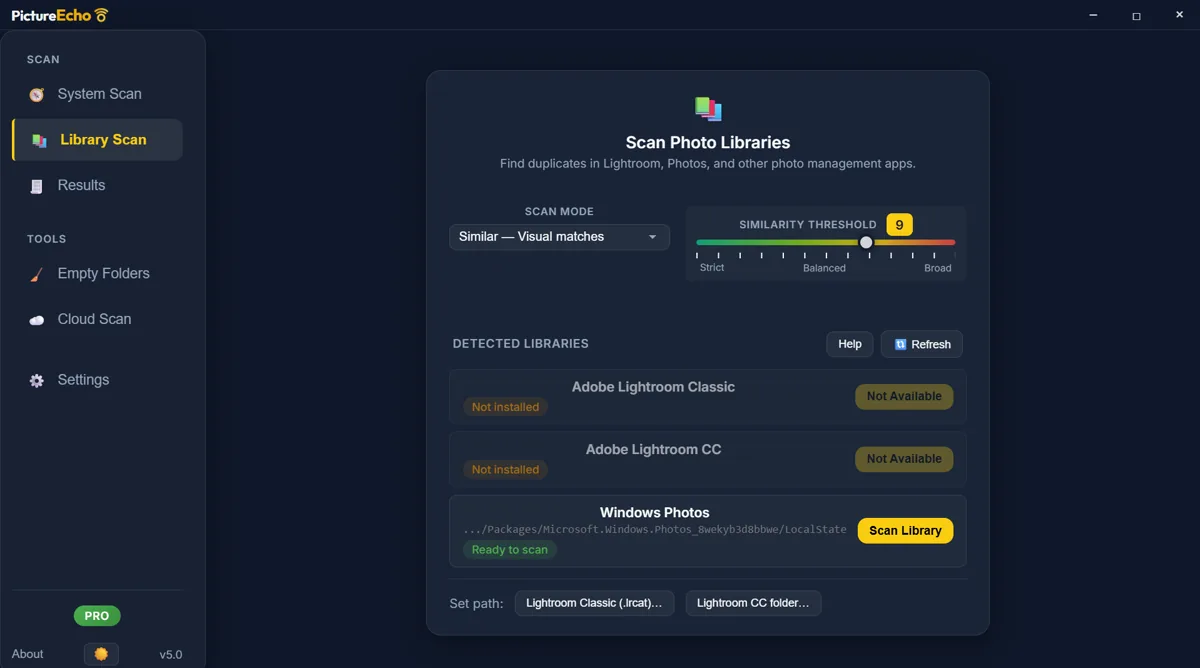
If Classic or CC shows Not installed, use Set path. Classic takes the .lrcat catalog. Lightroom CC takes its folder. Help and Refresh are on the same screen. Windows Photos is a separate row on that screen, not a Lightroom catalog and not Google Photos.
The same two Lightroom rows appear on a Mac. A Photos.app library is a different cleanup: Fix Duplicates adds the selected photos to an album named Duplicates by PictureEcho, and the delete happens inside Photos.
When the catalog is not detected, System Scan still reads a normal folder. Add Path, point it at the folder that holds the files, then Start Scan. Cloud-only placeholders are skipped until the files exist on disk. On Windows 11, Photos may keep pictures in OneDrive without a useful local index, so Add Path is the fallback when that index is missing.
A folder with only a few files that share a name and size can be sorted in File Explorer. That sort does not group pictures that look alike and have different names.
A short overview of the desktop app is on the PictureEcho page at Sorcim.
Review each group before you remove anything
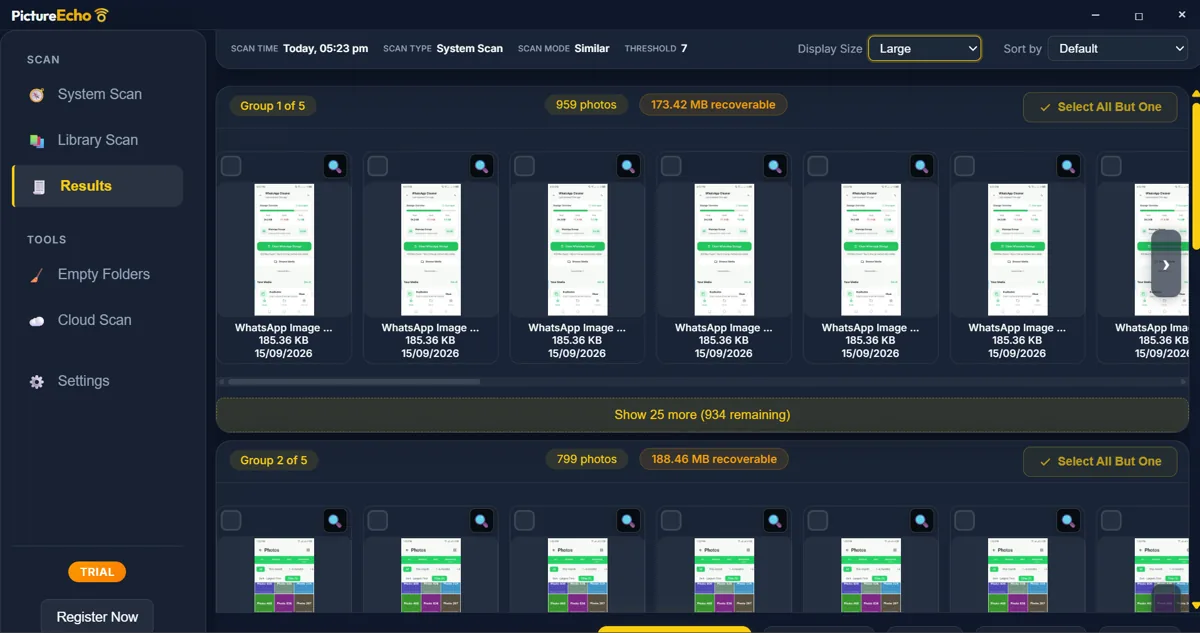
Start Scan and wait for Results. A group lists the matching photos with the file name, size, and date. Open Preview when two shots are close and the keeper is not obvious.
Select All But One leaves a single photo unselected in that group. Select Duplicates applies one keep rule to every group: Keep Oldest, Keep Newest, Keep Largest, Keep Highest Resolution, or Keep Lowest Resolution. Each rule leaves one photo unselected.
The trial cleans 10 groups, not 10 photos. The dialog is titled Trial Limitation, and it says the trial version removes duplicate photos from 10 groups only.
Choose Which Duplicate Photo to Keep | PictureEcho
Send the extras to the Recycle Bin
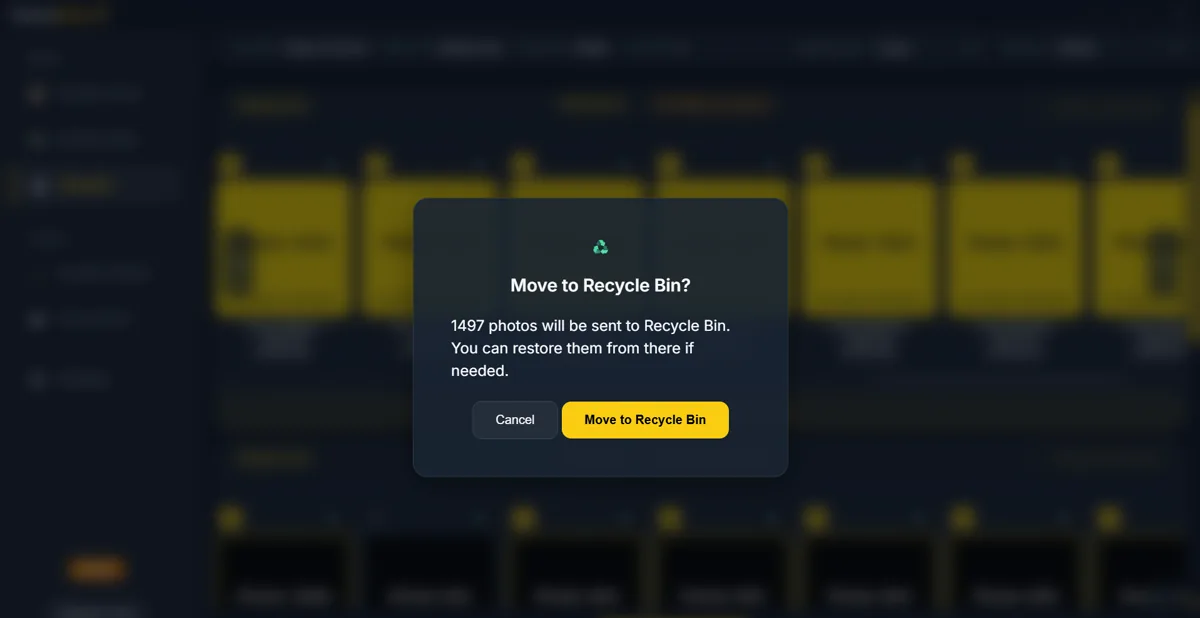
On Windows, Recycle Bin is the safer removal. The confirmation says the photos can be restored from there if needed. On a Mac, the matching action is Trash. Permanent Delete says it cannot be undone, on either system. Move puts the selected photos in a folder you choose and leaves them on disk.
Update the Lightroom catalog afterward
Lightroom still lists a photo after the file has been moved or deleted. Use Find Missing Photos so the catalog drops those old references. PictureEcho can remind you to do that after a Lightroom cleanup.